SNAP EBT Cards Explained: How They Work and Where You Can Use Them
The SNAP EBT card is the main way most people in the United States receive and use food stamp benefits today. If you’re new to SNAP, or you’ve just been approved and are waiting for your card, it can be confusing to figure out exactly how it works, where you can use it, and what you can buy.
This guide walks through the basics in clear, practical terms. It is for general information only and is not an official government site, not a caseworker service, and not a place to apply for benefits. For applications and personal case questions, you will need to go through official state and local agencies.
What Is a SNAP EBT Card?
The Supplemental Nutrition Assistance Program (SNAP) is a federal program that helps low-income households buy food. States run the program day-to-day.
Instead of paper food stamps, states now use an Electronic Benefit Transfer (EBT) card. This is a plastic card that works like a debit card, with a magnetic stripe or chip and a PIN.
Key points:
- EBT = “Electronic Benefit Transfer”, the system that delivers SNAP benefits.
- Your SNAP benefits are loaded electronically onto the card each month.
- You enter a PIN and pay at the checkout, similar to using a bank debit card.
- The card is usually mailed to you after your SNAP application is approved by your state.
Some states put multiple benefit programs on the same EBT card (for example, SNAP and cash assistance). The balance for each type of benefit is kept separate in the system.
Who Usually Qualifies for SNAP (and an EBT Card)?
You do not apply for the EBT card by itself. You apply for SNAP. If you are approved for SNAP, your state will typically issue you an EBT card automatically.
Eligibility is handled by your state or county agency, not by this site. The rules are based on federal law, but details and income limits vary by state.
Common factors that states look at:
- Household income (earned and unearned)
- Household size (how many people buy and prepare food together)
- Housing costs (rent, mortgage, utilities)
- Resources in some cases (certain types of savings or assets, depending on the state)
- Citizenship or immigration status and residency in the state
- Student status, if you are a college student, due to special rules
To find out whether you are likely to qualify, you can:
- Contact your local SNAP office or county human services department
- Use your state’s official benefits website or portal (often run by the state’s Department of Human Services, Social Services, or similar)
- Call your state’s SNAP or EBT hotline (the number is often listed on state government websites)
How to Apply for SNAP (So You Can Get an EBT Card)
Again, you cannot apply through HowToGetAssistance.org. To apply, you must use official state or local channels.
Most states offer three main ways to apply:
1. Online Application
Many states have an official benefits portal where you can:
- Create an account
- Fill out a SNAP application
- Upload documents
- Check your case status
Search for your state plus terms like “SNAP apply online” or “state benefits portal” and make sure you are on a .gov website to avoid scams.
2. In-Person Application
You can usually apply at a local SNAP office or county human services office. Typical locations include:
- County Department of Human Services (DHS)
- Department of Social Services (DSS)
- Health and Human Services (HHS) office
- Local Family Resource Center, depending on the state
You can ask staff for a paper application, fill it out there, or sometimes take it home and bring it back.
3. Mail, Fax, or Phone
Some states let you:
- Print a paper application from the official website and mail or fax it in
- Request an application by mail by calling the local office
- Apply by phone with a caseworker in limited situations
Because this process varies, it helps to call your local SNAP office or check your state’s official SNAP page for exact instructions.
Documents You May Need for SNAP (and Your EBT Card)
When you apply for SNAP, the agency will typically ask you to prove your identity, income, and expenses. Requirements can vary, but commonly requested documents include:
Identity and residency:
- Photo ID (driver’s license, state ID, passport, or other accepted ID)
- Social Security number or proof you have applied for one
- Proof of address (lease, utility bill, official letter)
Income and expenses:
- Pay stubs or a letter from your employer
- Unemployment benefit letters
- Social Security, pension, or disability benefit statements
- Child support received or paid
- Bank statements, if required by your state
- Rent or mortgage statements
- Utility bills (electric, gas, water, trash, heating fuel)
- Childcare or dependent care costs, if applicable
- Medical expense records (for certain households, such as older adults or people with disabilities, if allowed)
Having these documents ready can speed up your application and help you get your EBT card sooner if approved.
What Happens After You Apply
After you apply through your state’s official process, here is what typically happens:
Application receipt:
The agency logs your application. You may get a notice by mail, email, or through the online portal.Interview:
Most states require a SNAP interview by phone or in person. During this, a caseworker:- Verifies your information
- Asks follow-up questions
- Explains your rights and responsibilities
Verification:
You may be asked for additional documents if anything is missing or unclear.Eligibility decision:
After reviewing everything, the agency approves or denies your SNAP application and sends you an official notice of decision.EBT card issuance:
- If approved, your EBT card is usually mailed to your home address.
- Some local offices may let you pick it up in person, but this varies by area.
Setting your PIN:
When you receive your card, instructions will explain:- How to activate the card
- How to choose or change your PIN
- How to check your balance
If you have trouble with your card or PIN, contact your state’s EBT customer service number, usually printed on the back of the card or on your approval notice.
How Your SNAP EBT Card Works
Once your SNAP case is active and your EBT card is set up, here is how it generally functions:
Monthly Benefit Deposits
- Benefits are added to your card each month on a specific issuance day (often based on last name, case number, or other schedule).
- The deposit schedule is set by your state. You can usually find it on your state’s official SNAP or EBT website or by calling the EBT hotline.
- Unused benefits roll over to the next month, but:
- Long periods of no use may eventually lead to closure of the case, depending on state rules.
- It is a good idea to use your benefits regularly to avoid problems.
Using the Card at Checkout
At an eligible store:
- Shop for SNAP-eligible foods.
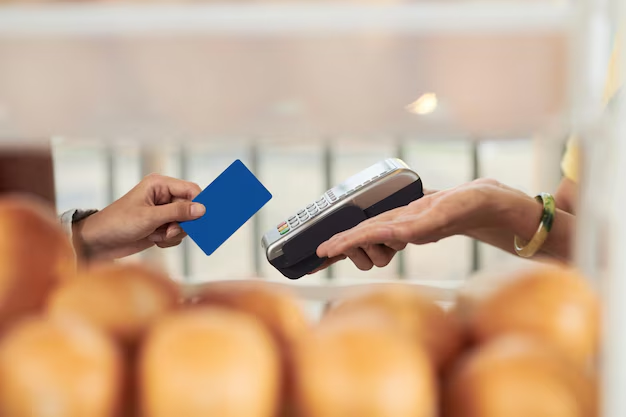
- At checkout, swipe or insert your EBT card.
- Select “EBT” or “Food” if the keypad asks for the account type.
- Enter your PIN privately.
- The system subtracts the amount from your SNAP balance.
- You receive a receipt showing your new EBT balance.
If you buy both eligible and non-eligible items, the register typically:
- Applies SNAP to eligible food items first
- Leaves other items to be paid with cash, debit, or another payment method
Where You Can Use a SNAP EBT Card
You can generally use your card at:
- Grocery stores
- Supermarkets
- Big-box stores that sell groceries (for example, large discount chains)
- Certain convenience stores that are approved to accept SNAP
- Some farmers’ markets
- Some online retailers that participate in your state’s SNAP online purchasing program
In-Store Purchases
Most major grocery chains and many independent grocery stores accept EBT. Look for:
- A “We Accept EBT” or “SNAP/EBT Accepted Here” sign near the entrance or at the register.
If you are unsure, you can call the store and ask if they accept SNAP EBT.
Farmers’ Markets
Many farmers’ markets participate in SNAP and may even offer bonus matching programs funded by local organizations (for example, extra dollars for fruits and vegetables). The terms of these programs are local, not national.
At some markets, you:
- Visit a central booth, swipe your EBT card, and receive tokens or a receipt you can use with vendors.
- Or pay some vendors directly with your card on a wireless EBT terminal.
To find out if a farmers’ market accepts EBT, you can:
- Call ahead
- Check the market’s official website or informational materials
- Ask at the information tent when you arrive
Online Purchases
Many states now allow SNAP EBT to be used online through:
- Large national retailers
- Some regional grocery chains
- Certain delivery services partnered with approved stores
Important details:
- Not all stores or websites accept EBT online.
- Delivery fees, tips, and certain service fees cannot usually be paid with SNAP; you may need another payment method.
- You must confirm that the website is part of the official SNAP online purchasing program for your state. This information is usually available on:
- Your state’s SNAP website
- The USDA Food and Nutrition Service site (a federal resource)
What You Can and Cannot Buy With SNAP EBT
SNAP is designed to help buy food for home consumption. The rules are set at the federal level.
Common Items You Can Buy With SNAP EBT
- Fruits and vegetables (fresh, frozen, canned, or dried, if for home use)
- Meat, poultry, and fish
- Dairy products (milk, cheese, yogurt)
- Bread, cereal, rice, and pasta
- Snack foods (chips, crackers, nuts, etc.)
- Non-alcoholic beverages (juice, soda, coffee, tea)
- Seeds and plants that produce food for the household to eat
Items You Generally Cannot Buy With SNAP EBT
- Alcoholic beverages (beer, wine, liquor)
- Tobacco products (cigarettes, cigars, vaping products)
- Vitamins, medicines, or supplements
- Hot foods ready to eat (for example, a hot rotisserie chicken, hot deli meals), except in limited special programs some states may offer during certain emergencies
- Food eaten in the store, such as in-restaurant meals
- Non-food items, including:
- Pet food
- Cleaning supplies
- Paper products
- Toiletries and cosmetics
- Diapers and wipes
If an item’s package is labeled with a Supplement Facts panel, it is generally treated as a supplement and not approved. Items with a Nutrition Facts label are typically considered food, but store systems ultimately determine eligibility.
Simple Comparison: Allowed vs. Not Allowed With SNAP EBT
| Category | Usually Allowed with SNAP EBT | Usually Not Allowed with SNAP EBT |
|---|---|---|
| Groceries | Basic groceries, snacks, drinks | – |
| Prepared / Hot Items | Cold deli items (if packaged as grocery, varies) | Hot prepared foods, restaurant meals |
| Non-Food Items | – | Soap, shampoo, paper towels, diapers, pet food |
| Health-Related Products | – | Vitamins, supplements, over-the-counter meds |
| Alcohol / Tobacco | – | Beer, wine, liquor, cigarettes, vaping products |
| Services / Fees | – | Delivery, tips, service charges |
Because store systems can differ, if something is declined:
- Check your receipt
- Ask the cashier which items did not qualify
Checking Your EBT Card Balance
It is important to keep track of your balance so you know how much you can spend.
Common ways to check your SNAP EBT balance:
- Receipt: After each purchase, your remaining balance usually appears at the bottom.
- EBT customer service phone number: Printed on the back of your card. You can call and follow the prompts.
- State EBT or benefits website: Many states let you create an online account to view:
- Current balance
- Recent transactions
- Notices and letters, in some cases
- Mobile apps: Some states offer an official EBT or benefits app. In addition, some third-party apps exist, but it is safest to use apps clearly linked from:
- Your state’s official SNAP or EBT page, or
- State .gov resources
Always verify you are using an official state resource or a trusted app before entering your card number or PIN.
Common Problems and How to Handle Them
1. Card Not Arriving
If you have been approved but your EBT card has not arrived within the timeframe mentioned in your approval notice:
- Confirm your mailing address with your local SNAP office.
- Call your state’s EBT customer service number to ask about the status.
- Ask if there are any local office pickup options, if needed.
2. Lost, Stolen, or Damaged Card
If your card is lost, stolen, or damaged:
- Call your EBT customer service line immediately (number is typically on your state’s official SNAP website and may appear on old paperwork).
- Report the card as lost or stolen so the system can block it.
- Request a replacement card.
- Follow the instructions to activate the new card and set a new PIN.
Act quickly. If someone uses your benefits before you report the card missing, those benefits are often not replaceable.
3. Forgotten PIN
If you forget your PIN:
- Call the EBT customer service number.
- Use the automated system or speak to a representative to reset your PIN.
- Follow the directions carefully and do not share your PIN with anyone.
4. Transaction Declined
A transaction may be denied because:
- You do not have enough SNAP balance for the purchase.
- You are trying to buy items not approved under SNAP rules.
- The store’s EBT system is temporarily down.
- You entered the wrong PIN several times, leading to a temporary lockout.
In this case, you can:
- Check your balance using the methods listed above.
- Remove non-eligible items from your purchase.
- Try again later or at a different approved store, if it seems like a technical issue.
- Contact EBT customer service if you believe there was an error.
Why Applications Get Delayed or Denied
Only your state or local SNAP office can give you the specific reason for your case, but common issues include:
- Missing documents: Income proof, ID, or other verification not submitted.
- Missed interview: If you do not complete the SNAP interview, your application may be closed.
- Incomplete application: Unanswered questions or unclear information.
- Income too high for the program: Based on your household size and income details.
- Residency or citizenship issues: If you cannot prove you live in the state or meet qualifying status rules.
If your application is delayed:
- Call your local SNAP office or check your state’s online portal (if available) to see what is needed.
- Ask specifically which documents or steps you are missing.
How SNAP Appeals and Reviews Usually Work
If you receive a denial notice, benefit reduction, or case closure, the letter usually explains:
- The reason for the decision
- Your right to appeal or request a fair hearing
- The deadline to file an appeal (often a set number of days from the notice date)
- How to submit the appeal request (mail, in person, sometimes online or by phone)
Typical steps if you want to appeal:
- Read the notice carefully so you understand the stated reason.
- Contact your local SNAP office to ask:
- How to file an appeal or request a hearing.
- What supporting documents might help your case.
- Submit the appeal within the deadline listed on your notice.
- Prepare for the hearing (if there is one):
- Bring or submit copies of any documents showing your current income, expenses, or other relevant information.
- You may be able to have an advocate or representative help you; local legal aid and nonprofit organizations sometimes offer assistance.
Appeal and review processes differ by state, so it is important to follow the instructions on your specific notice or speak directly with your caseworker or local office.
If You Do Not Qualify for SNAP: Other Food Assistance Options
If SNAP is not an option for you, there are other ways many people find short-term or supplemental food help:
Food pantries and food banks:
Local charities, religious organizations, and community groups often distribute free groceries. You can:- Call 2-1-1 (a community referral line available in many areas)
- Contact local United Way organizations
- Ask at local community centers or churches
Community meal programs and soup kitchens:
Offer prepared meals at no cost or low cost.School meal programs:
Families with children may be able to access:- Free or reduced-price school breakfast and lunch
- Summer meal programs when school is out
Women, Infants, and Children (WIC):
Pregnant people, new parents, infants, and young children may qualify for WIC benefits, which are separate from SNAP and have their own rules and application process.
For each of these, you typically must contact the official program office, school district, or community organization directly to learn how to apply or sign up.
Tips to Avoid Scams and Make Sure You Are Using Official Channels
Because SNAP and EBT deal with benefits and personal information, scammers sometimes try to take advantage of people.
To protect yourself:
- Look for .gov websites when applying online or logging into a benefits portal.
- Be cautious of texts, emails, or social media messages asking for:
- Your EBT card number
- Your PIN
- Your Social Security number
Official agencies usually do not ask for your PIN by text or email.
- Do not share your PIN with anyone, including friends or family, unless your state has specific rules about authorized representatives and you have chosen someone you fully trust.
- If someone promises “guaranteed approval,” “instant benefits,” or charges a fee to “get you SNAP faster,” be skeptical. In most cases:
- SNAP applications are free
- Decisions are made by state or county agencies, not private businesses
- When in doubt, call your local SNAP office or the state EBT customer service number listed on official government websites or on the back of your card.
Understanding how the SNAP EBT card works—how to get it through official channels, what you can buy, and where you can use it—can make it easier to stretch your food budget and avoid problems. For personal case questions, applications, or appeals, the next step is to contact your state or local SNAP agency, use the official benefits portal, or call the program’s official hotline in your area.
Discover More
- EBT Cards How to Get and Use
- How To Apply For SNAP - Online, Mail, Or In Person
- How To Check SNAP Application Status - And Common Delays
- SNAP Benefits Explained: What SNAP Covers And What It Doesn’t
- SNAP Eligibility Basics: Income, Household Size, And Key Rules
- SNAP Interview And Verification: What To Expect
- SNAP Overpayments And Notices: What To Do If You Get a Letter
- SNAP Recertification: Renewals, Reporting Changes, And Deadlines
- SNAP Scams & Fraud Warnings: Protecting Your Benefits
- SNAP Work Requirements: What Counts And Who Is Exempt