WIC for Infants: Formula Benefits, Breastfeeding Support, and Your Options
The WIC program for infants is designed to help families give their babies a healthy start, whether they use infant formula, breastfeeding, or a combination of both. This guide explains how infant benefits usually work through WIC (Women, Infants, and Children), what support is often available, and how to move forward through official WIC offices and websites.
HowToGetAssistance.org is not a government agency, not an official WIC office, and not an application site. This information is here to help you understand typical processes, so you can better navigate the official WIC system where you live.
What Is WIC for Infants?
WIC for infants is the part of the WIC program that focuses on babies from birth up to their first birthday. Through your state or local WIC agency, infants may receive:
- Infant formula benefits (for babies who are formula-fed or combination-fed)
- Breastfeeding support (education, peer counselors, and sometimes breast pumps)
- Nutrition counseling for parents or caregivers
- Referrals to health care and other community resources
The specific benefits, formula brands, and breastfeeding services can vary by state, county, and local office. Your local WIC office or state WIC agency is the final source for what’s available where you live.
Who Typically Qualifies for Infant WIC Benefits?
WIC eligibility is always decided by the official WIC program, not by websites like this. In general, WIC serves:
- Pregnant women
- Postpartum women (including breastfeeding parents)
- Infants and children up to age 5 who are at nutritional risk and meet income and residency guidelines
For infants, the main factors usually include:
1. Age and Category
- The baby must be an infant (birth to 12 months).
- The infant is usually added to the parent or caregiver’s existing WIC case, or a new WIC case is opened for the baby.
2. Income and Household Guidelines
Most WIC programs use income limits based on household size. Typically:
- Income is compared to a percentage of the federal poverty level (varies by state).
- Household size usually counts everyone who lives together and shares income and expenses.
- Receiving other benefits (like Medicaid, SNAP, or TANF) can sometimes make WIC income verification simpler, but this depends on your state’s rules.
3. Nutritional Risk
A WIC health professional (like a nurse or nutritionist) generally must determine that the infant is at some kind of nutritional risk, such as:
- Low birth weight
- Growth concerns
- Feeding difficulties, or
- Other commonly recognized nutrition-related risks
This is normally done during the WIC appointment, using height/weight checks and basic health and feeding questions.
WIC Infant Benefits: Formula vs. Breastfeeding Support
Many parents want to know: Will WIC help with formula? Will WIC support breastfeeding? In many areas, both options exist, depending on your situation and your feeding choice.
Typical Infant Feeding Options Under WIC
Below is a simple comparison of what families often see through local WIC programs. Exact details, quantities, and eligibility rules are set by your state or local WIC agency.
| Option / Support Type | Who It’s For | What It May Include (Typically) | Where to Ask |
|---|---|---|---|
| Fully Breastfed Infant | Baby receives only breast milk | Extra foods for breastfeeding parent, more breastfeeding support, sometimes breast pump | Local WIC office / breastfeeding coordinator |
| Partially Breastfed Infant | Baby gets breast milk + some formula | Some formula benefits, breastfeeding counseling, nutrition education | Local WIC office |
| Fully Formula-Fed Infant | Baby receives only formula | Monthly formula benefits up to a set amount, nutrition counseling for caregiver | Local WIC office |
| Breastfeeding Support Services | All breastfeeding parents on WIC | Classes, peer counselors, help with latching/positioning, referrals | WIC breastfeeding hotline or office |
| Special Formula / Medical Foods | Infants with medical needs (by prescription) | Specialized formula, medical foods (if approved by WIC) | WIC clinic staff, infant’s health care provider |
Your local WIC staff will usually talk through your feeding plans and explain which benefits apply to your infant.
WIC and Infant Formula: What to Expect
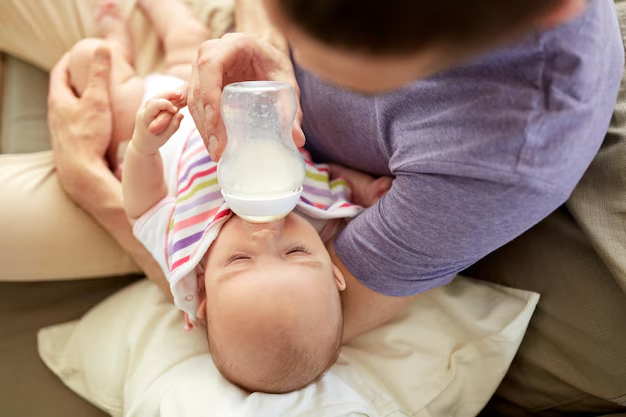
Many families use WIC to help with the cost of infant formula. The program typically:
- Covers a standard type and brand of formula for healthy, full-term babies
- Provides a set monthly amount (not always enough to cover 100% of your baby’s needs)
- Loads benefits onto a WIC card or voucher that you use at approved stores
Common Features of WIC Formula Benefits
While details vary by state, you may see:
- Standard formula for most infants (cow’s-milk based, iron-fortified)
- A specific brand and size (for example, certain-ounce cans or ready-to-feed bottles)
- Some ability to adjust the type or form (powder vs. liquid) with WIC approval
If your baby has a medical condition or allergy, your baby’s health care provider may need to complete a special formula request form for WIC to consider a different product.
What WIC Usually Does Not Cover
WIC generally does not act as:
- An emergency or same-day formula provider
- A source for unlimited formula
- A substitute for medical care or urgent feeding issues
For emergencies or if you run out before your WIC benefits reset, some families contact:
- Local food pantries or community organizations
- 211 (in many areas) for community resource referrals
- Their pediatrician or local health department for guidance and possible referrals
Always ask your local WIC office what resources may be available in your area.
WIC Breastfeeding Support: What’s Commonly Available
WIC generally encourages breastfeeding but supports all feeding choices. Breastfeeding help is often one of the most valuable parts of the program.
Types of Breastfeeding Support You May See
Depending on your local agency, support can include:
- Breastfeeding education during and after pregnancy
- One-on-one help from WIC staff trained in lactation support
- Peer counselors (experienced breastfeeding parents who provide guidance)
- Group classes or support groups
- Help with common early issues like:
- Sore nipples
- Latch or positioning problems
- Supply concerns
- Breast pumps, which might include:
- Short-term use of a hospital-grade pump (often for certain medical or breastfeeding situations)
- Personal-use pumps for eligible breastfeeding parents
The availability and type of breast pump support is different from place to place. This usually depends on:
- Local funding
- Inventory and equipment
- Your breastfeeding status and medical situation
If you’re pregnant or just had a baby, you can ask your WIC clinic:
- “What breastfeeding support and pump options do you offer here?”
- “When should I contact you if I’m having feeding challenges?”
How to Add a Newborn or Infant to WIC
You cannot apply for WIC through HowToGetAssistance.org. To add an infant or enroll yourself and your baby, you will need to go through official WIC channels where you live.
Step 1: Locate Your Official WIC Agency
Because WIC is run by state and local agencies, the first step is to identify the correct office. You can:
- Search online for “[your state] WIC program”
- Call your state health department and ask for WIC contact information
- Dial 211 in many areas and ask for the WIC office or nutrition programs for women and infants
Verify you are on an official government website or talking to an official office before sharing personal information.
Step 2: Schedule an Appointment
Most WIC agencies require an appointment to apply or add an infant:
- Some offices offer phone or video appointments
- Others require in-person visits, especially for initial enrollment or measurements
- Ask whether you and the baby both need to attend and what documents to bring
Step 3: Gather Commonly Required Documents
Requirements can vary, but families are often asked to bring:
For the Parent or Caregiver:
- Photo ID (driver’s license, state ID, or other accepted ID)
- Proof of address (utility bill, lease, or official mail)
- Proof of income for everyone in the household who works:
- Pay stubs (often last 30 days)
- Benefit award letters (SNAP, TANF, SSI, unemployment, etc.)
- Tax returns or other income documentation, if requested
For the Infant:
- Proof of birth (hospital record, birth certificate if available, crib card, or discharge paperwork—local rules differ)
- Immunization record (if available)
- Medical documentation if requesting special formula (for example, a prescription or WIC medical form signed by a health care provider)
If you cannot find a document, ask the WIC office what alternatives they accept.
Step 4: Attend the WIC Appointment
During the appointment, WIC staff typically:
- Review your documents and household information
- Measure and weigh you and/or your baby
- Ask questions about:
- Pregnancy and birth history
- Current feeding (breastfeeding, formula, or both)
- Any health or nutrition concerns
- Determine nutritional risk and eligibility
- Explain:
- What benefits you and your infant qualify for
- How to use the WIC card or checks
- When to come back for follow-up visits
If your infant is approved, benefits usually begin after the official WIC staff complete the eligibility process.
What Happens After Your Infant Is Enrolled
Once your baby is on WIC, here’s what typically happens:
Ongoing Benefits
- Your WIC benefits are issued each month (often on an electronic benefits card).
- You receive a set package of foods and/or formula based on:
- Your baby’s age
- Feeding method (breastfed, formula-fed, or both)
- Any special medical needs (if approved)
Follow-Up Appointments
WIC usually schedules regular check-ins, often every few months, to:
- Review your infant’s growth (height and weight)
- Reassess nutrition needs
- Adjust the food package as your baby grows (for example, around 6 months when solids are introduced)
- Provide education and support on introduction of solids, feeding schedules, and more
If you miss appointments, benefits may be delayed, changed, or discontinued, so it’s important to stay in contact with your local office.
Common Reasons Infant WIC Benefits Are Delayed or Denied
Only the official WIC agency can decide eligibility. However, families often run into similar types of issues:
Missing Documents
- No proof of income, identity, or address
- No acceptable proof of birth for the infant
- Not having a required medical form for special formula
Income Over the Limit
- Household income is higher than the program’s allowed level
- Not all income sources were reported accurately
Not Attending Appointments
- Missing or repeatedly skipping scheduled WIC visits
- Not completing required follow-up appointments
Residency Issues
- Not living in the state or local area covered by that WIC agency
Unable to Confirm Nutritional Risk
- In some cases, documentation or evaluation is not sufficient to meet the program’s criteria
If you believe a decision about your infant’s WIC benefits is not correct, you can ask your local WIC office about:
- How to request a review
- Time limits for appeals or hearings
- What extra information you can provide
Appealing a WIC Decision for Your Infant
WIC is required to provide a fair hearing process if you are denied benefits, reduced benefits, or terminated from the program. The steps can vary by state, but families are usually able to:
- Ask for an explanation in writing of why the infant was denied or benefits were changed.
- Request a fair hearing within a specific time period (as listed in the notice).
- Provide:
- Additional documents (income proof, medical note, etc.)
- Clarifications if information was misunderstood
To start, contact your local WIC clinic or the number listed on your WIC notice and ask:
- “How do I request a fair hearing or appeal?”
- “What is the deadline to submit a request?”
- “Can benefits continue while I appeal?” (this can differ by state and situation)
If You Don’t Qualify for WIC: Other Infant Nutrition Options
If your infant does not qualify for WIC, or if you need more help than WIC can provide, there may be other resources:
1. SNAP (Supplemental Nutrition Assistance Program)
- Helps with the cost of food for the whole household, not just the infant.
- Administered by state or county human services departments.
- You can search online for your state’s SNAP office or call your local human services agency.
2. Medicaid or CHIP
- Health coverage for eligible infants, children, and parents.
- In some states, having Medicaid can simplify WIC income verification, but this varies.
- Apply through your state’s Medicaid or CHIP office or official benefits portal.
3. Local Food Pantries and Community Programs
- Many communities have food pantries, diaper banks, and charitable organizations that provide formula or baby food when available.
- Call 211 (where available) and ask for:
- “Food pantries near me”
- “Infant formula or baby supply programs”
4. Health Department Programs
- County or city health departments sometimes offer:
- Breastfeeding support
- Nutrition counseling
- Referrals to additional programs
Ask your local health department what services they provide for infants and new parents.
How to Make Sure You’re Using Official WIC Channels
Because WIC benefits involve personal and financial information, it’s important to be certain you’re working with real government offices, not unofficial sites or third-party services pretending to be WIC.
Here are ways to check:
- Look for “.gov” or your state health department’s site when searching online.
- Confirm phone numbers through:
- Your state health department
- Official county government directories
- 211 information and referral lines
- Be cautious of:
- Sites that promise “guaranteed approval” or charge a fee to apply.
- People asking for your WIC card number, Social Security number, or bank information outside of the official application or recertification process.
- If in doubt, call your local WIC office directly and ask:
- “Is this the correct office for WIC in my county?”
- “Do you have an official website I can use for information?”
Remember: HowToGetAssistance.org cannot enroll you in WIC, check your case, or provide WIC benefits. We can only explain how the system typically works so you’re prepared when you contact your official WIC agency.
Key Takeaways for WIC and Infants
- Infants (birth–12 months) may receive help through WIC with formula, breastfeeding support, and nutrition services, depending on eligibility.
- Benefits and rules vary by state and local office; always confirm details with your official WIC agency.
- To get started, identify your state or local WIC office, schedule an appointment, and gather ID, proof of address, income documents, and proof of birth for your baby.
- WIC can support fully breastfed, partially breastfed, and fully formula-fed infants, and may also provide special formula with medical documentation.
- If you face delays or denials, ask your local WIC office about appeal or fair hearing options.
- If you do not qualify, explore SNAP, Medicaid/CHIP, food pantries, and health department programs through official agencies in your area.
Once you understand these basics, your next step is to contact your state or local WIC program directly. They are the only ones who can confirm your infant’s eligibility, explain available benefits, and help you enroll through official channels.
Discover More
- How To Apply For WIC: Appointment And Documentation
- Switching WIC Clinics - Moving Counties/States: How It Works
- What WIC Provides: Foods, Nutrition Support, Referrals
- WIC Approved Foods List: What’s Typically Covered
- WIC Card Guide: How Benefits Are Issued And Used
- WIC Eligibility Basics: Who Qualifies And How Income Is Measured
- WIC FAQs: Common Questions Families Ask
- WIC For Pregnant People: What To Expect At Visits
- WIC Recertification: Renewals And Missed Appointments